
The Rise of Caffeine Pouches: A New Hidden Risk for Teens?
Written by Eunseo Whaong
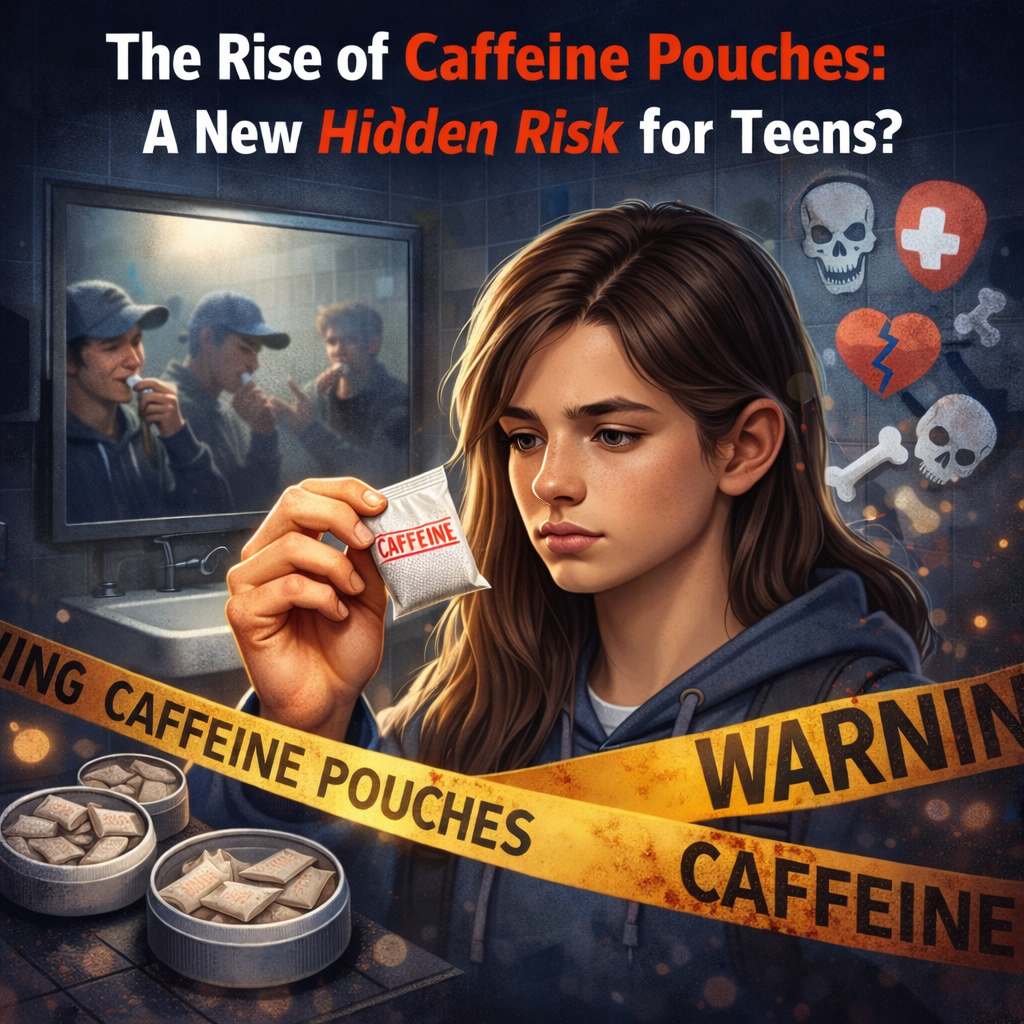
A new product is quietly entering the youth market — caffeine pouches. Small, discreet, and easy to use, these pouches are placed between the gum and lip, delivering caffeine without the need for a drink. Because they resemble nicotine pouches in form but are often marketed as “clean energy,” many teens may perceive them as harmless.
But health experts are beginning to raise concerns.
What Makes Caffeine Pouches Different?
Unlike coffee or energy drinks, caffeine pouches are:
odorless
portable
difficult for adults to detect
fast-acting
This combination makes them particularly appealing to adolescents, especially in school settings where beverages may be restricted but small pouches can go unnoticed.
The concern is not just about caffeine — it is about how easily and frequently it can now be consumed.
A Product Designed for Modern Teen Lifestyles
Today’s teenagers live in fast-paced academic and social environments. Many feel pressure to stay alert, perform well, and manage packed schedules. Products promising “instant focus” naturally attract attention.
Caffeine pouches align closely with this culture:
✔ no preparation required
✔ no sugar or calories marketed on the label
✔ positioned as a productivity tool
When convenience meets performance messaging, repeated use can quickly turn into habit.
Why Experts Are Paying Attention
Adolescence is a critical period for brain development, sleep regulation, and emotional stability. High or frequent caffeine intake has been associated with:
sleep disruption
increased anxiety
elevated heart rate
difficulty concentrating after the stimulant wears off
Because pouches allow caffeine to be used almost anywhere — before class, during studying, or even late at night — they may encourage patterns of consumption that teens would not otherwise adopt.
Another concern is dose awareness. Without the familiar format of a cup or can, teens may lose track of how much caffeine they are actually consuming.
The Discretion Problem
Perhaps the most significant difference between caffeine pouches and traditional sources is invisibility.
Parents and educators can easily notice a large energy drink. A pouch, however, leaves little visual trace.
Public-health researchers often warn that when stimulant products become easier to hide, early and frequent use becomes more likely — particularly among younger consumers still developing self-regulation skills.
Lessons From the Past
Health experts frequently look at historical patterns when evaluating new products. Items that were once viewed as harmless — such as certain tobacco alternatives — gained popularity rapidly because they were convenient, discreet, and heavily marketed around lifestyle benefits.
The concern is not that caffeine pouches are identical to those products, but that the adoption pattern may look familiar: early normalization followed by growing health questions.
Recognizing these patterns early allows families, educators, and teens to make more informed decisions.
A Behavioral Perspective
From a behavioral science viewpoint, caffeine pouches sit at the intersection of several powerful influences:
performance culture
convenience-driven consumption
subtle marketing
habit formation
When a stimulant becomes frictionless to use, the barrier to repeated behavior drops — and habits form faster than many realize.
This does not mean every teen who tries a pouch will develop unhealthy patterns. But it highlights how product design can shape behavior long before risks are fully understood.
The Bigger Question
The emergence of caffeine pouches signals a broader shift in how stimulants are packaged and consumed. Instead of asking only whether caffeine is safe, a more important question may be emerging:
What happens when access becomes nearly effortless?
Awareness is the first line of prevention. By understanding how new products fit into modern teen culture, young people can make intentional choices rather than reactive ones.
Energy can support performance — but sustainable health depends on habits that protect sleep, brain development, and overall well-being.
As caffeine products continue to evolve, staying informed may be one of the most powerful tools teens have.
