
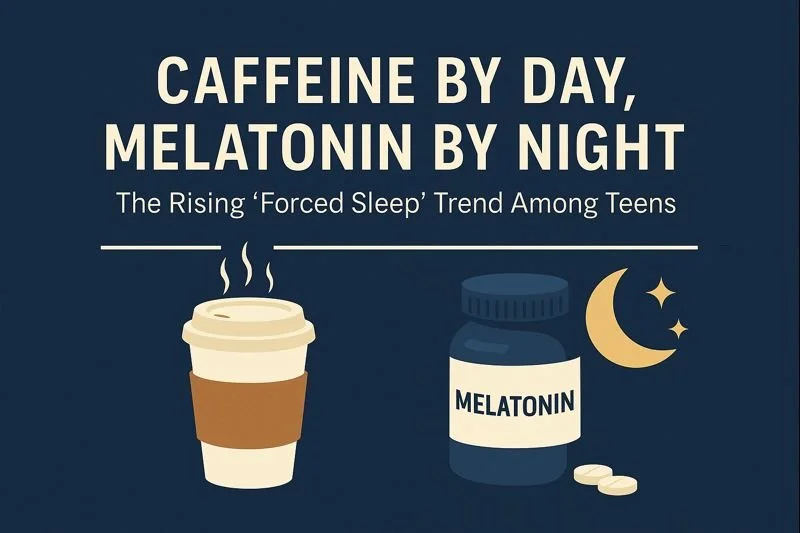
Caffeine by Day, Melatonin by Night” — A Growing Concern Among Teens
Here’s the article shared by Sewoong:
👉 https://naver.me/5V8YnGid
Written by Eunseo Whaong
Staying awake with caffeine during the day, then forcing themselves to sleep with melatonin at night.
Many students are now relying on caffeine to stay awake during the day and melatonin to force themselves to sleep at night. As someone who studies teen caffeine habits, this immediately caught my attention.
During busy school periods, students drink energy drinks or coffee again and again to stay alert. But caffeine can stay in the body for 6–12 hours, meaning an afternoon drink can easily disrupt sleep. When they can’t fall asleep later, they turn to melatonin to “reset” their sleep cycle.
What makes this even more concerning is that many teens use high-dose imported melatonin, which often contains inaccurate or inconsistent amounts of the hormone. Reports show that some products have four to five times the labeled dose, especially gummy types that teens prefer. Side effects such as vivid dreams, next-day sleepiness, headaches, and trouble concentrating are being reported more frequently.
The biggest issue is the cycle itself:
Caffeine keeps them awake
Melatonin forces them to sleep
Their natural rhythm becomes dependent on both
This can harm sleep quality, focus, mood, and long-term health — especially for teens whose brains are still developing.
From my perspective, caffeine and melatonin are not “bad,” but turning them into a routine can easily mask deeper problems like chronic sleep deprivation and stress. Healthy sleep habits and balanced energy routines are far more effective than relying on substances.
