
Are Teens Choosing Energy Drinks — or Being Engineered to Want Them?
Written by Eunseo Whaong
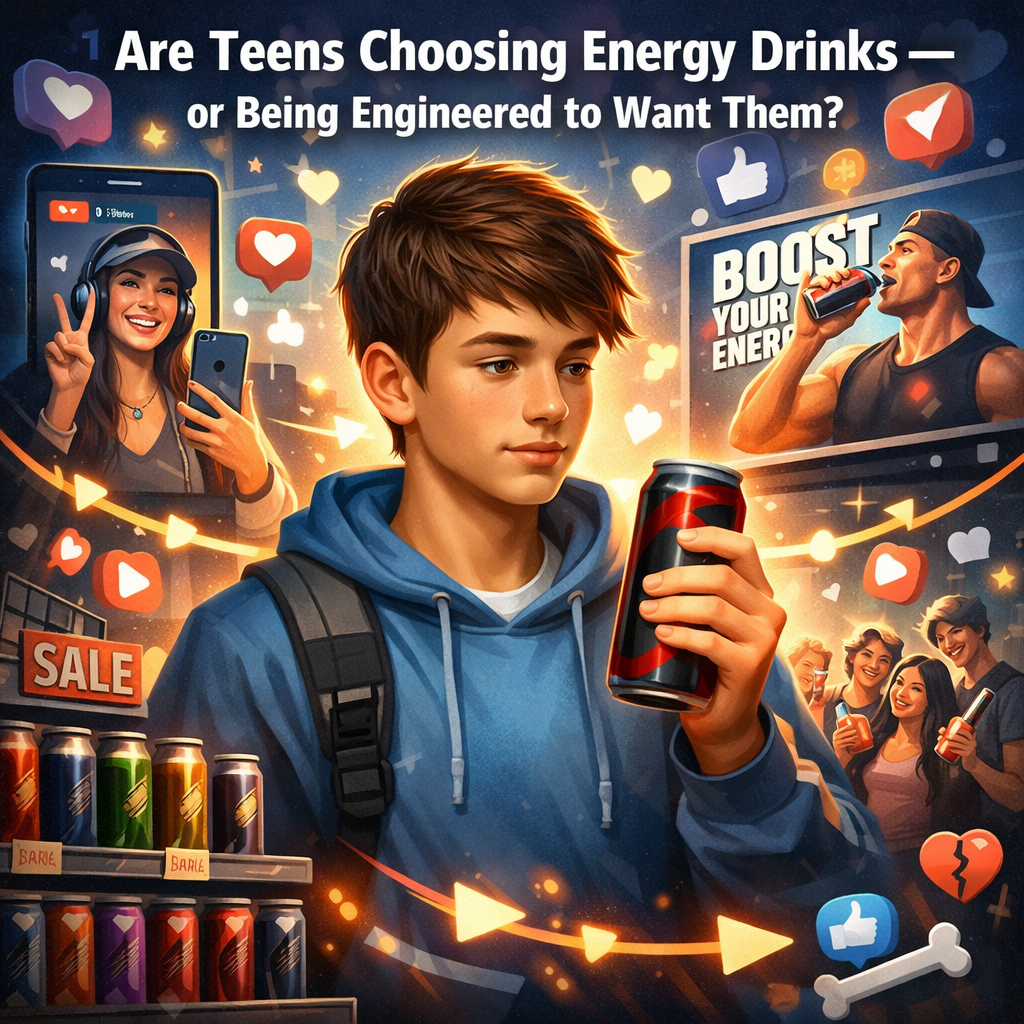
Energy drinks are everywhere — in convenience stores, school backpacks, and across social media feeds. With bright packaging and influencer promotions, they are often marketed as symbols of energy and performance. But an important question is emerging:
Are teens truly choosing these drinks, or are they being influenced to want them?
Research suggests that frequent exposure to digital advertising is linked to higher energy-drink consumption among adolescents. Marketing appears in gaming platforms, short videos, and influencer content, making it feel less like advertising and more like everyday culture.
These campaigns are carefully designed to appeal to young consumers. Bold colors, sweet flavors, and messaging tied to confidence or athletic success can gradually normalize consumption. Behavioral science describes this pattern simply:
repetition → normalization → habit.
Peer influence adds another layer. Many teens recognize major energy-drink brands but know little about their ingredients or caffeine levels. When friends drink them regularly, the behavior starts to feel expected rather than intentional.
Health experts are paying attention. High caffeine intake has been associated with sleep disruption, anxiety, increased heart rate, and difficulty concentrating — all factors that can affect academic performance and overall well-being.
Another lesser-known concern involves bone health. Adolescence is a critical period for building bone mass, and research suggests caffeine may slightly reduce calcium absorption. While adequate nutrition can help offset this effect, problems may arise when caffeinated beverages replace healthier options like milk.
From a behavioral perspective, energy drinks sit at the intersection of identity, belonging, and algorithm-driven advertising. Early and repeated exposure can shape long-term habits — sometimes without conscious awareness.
This does not mean teens lack choice. But it highlights how modern environments are engineered to guide decisions.
So the real question may not be whether teens are choosing energy drinks — but how much their choices are being shaped before they even realize it.
Understanding these influences empowers young people to make more intentional decisions about what they consume. Because energy matters — but informed choices matter even more.
