
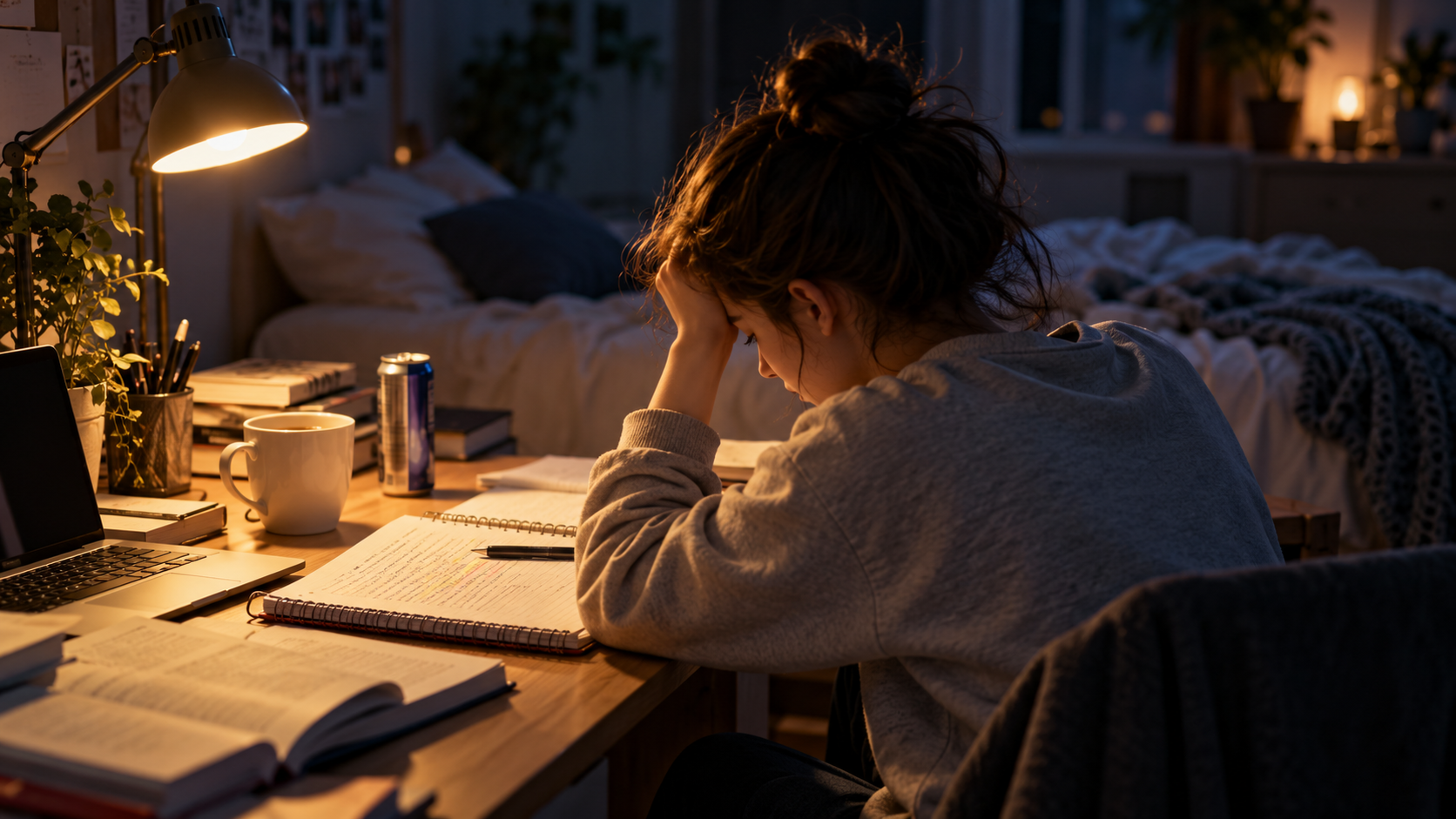
Another assignment. Another deadline. Another reason to stay awake.
When school gets busy, coffee or an energy drink can feel like a shortcut to getting everything done. But feeling more awake does not mean your body has received the rest it needs.
The CDC recommends that teens ages 13–18 get 8–10 hours of sleep each night. Getting enough sleep supports attention, mental health, and readiness to learn.
Caffeine can make that harder. According to the American Academy of Pediatrics, it can remain in the body for more than eight hours, depending on the person. An afternoon drink may still affect you when it is time for bed.
That can create a frustrating pattern: feeling tired, reaching for caffeine, having trouble sleeping, and feeling tired again.
Before your next late-night study session, try planning a stopping time, breaking assignments into smaller tasks, and keeping a consistent bedtime. If you are regularly too tired to get through the day, talk with a trusted adult or healthcare professional.
At CaffiTeen, we encourage students to treat sleep as part of their study plan.
Your next study strategy might start with bedtime.
Sources: CDC, “Sleep”; American Academy of Pediatrics, “The Effects of Caffeine on Kids: A Parent’s Guide.”
This article is for educational purposes and is not a substitute for medical advice.
